
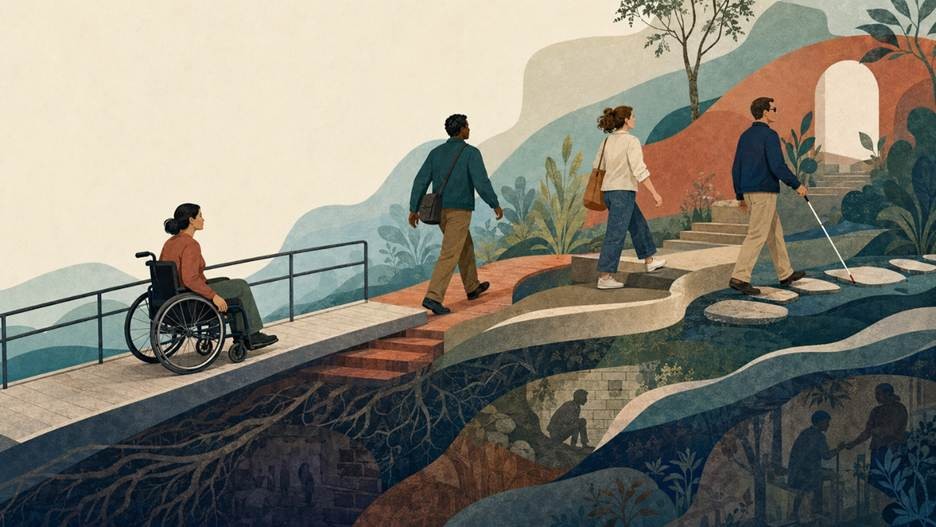

SPD senior social worker Syed Abdul Qader Alsagoff reflects on what his work with persons with disabilities has taught him about resilience, and how awareness, manageable actions and connection can help all of us through difficult periods.
Recognising the resilience already present
The first step in building resilience is not always learning something new. Sometimes, it begins with recognising strengths that are already present, even if they have gone unnoticed.
In supporting persons with disabilities (PwDs), I have met individuals managing circumstances that we may never notice. These can include coping with changes in health, work or independence, inaccessible environments, rejection, or the need to find different ways to complete everyday tasks.
These experiences are not always described as achievements. They may simply be regarded as part of daily life. Yet they often point to a person’s ability to adapt, solve problems, seek support and continue moving forward.
The point is not to glamourise adversity or suggest that people should have to become stronger because of difficult circumstances. However, attempts to remove barriers should be advocated, not merely tolerated. When a person’s past efforts go unrecognised, the abilities developed through those experiences can also remain hidden.
Recognising what we have already managed can help rebuild confidence in what may be possible next.
Noticing stress before it grows

Resilience is often associated with how we respond after a major setback. But it can also begin much earlier, with the ability to notice what is happening within us.
Stress does not always arrive dramatically. It may appear as difficulty sleeping, tension in the body, irritability, tiredness, withdrawal or a sense that ordinary tasks are becoming harder to manage. These signals do not mean that we are weak or failing. They provide information about what we may be experiencing and what we might need.
Awareness creates a small but important space between what happens and how we respond. When we recognise that we are hurt, frustrated or overwhelmed, we have more room to decide what to do with that feeling.
For example, difficult feedback at work may leave us feeling discouraged or defensive. Resilience does not require us to view the experience positively right away. We can first acknowledge its effect, take time to process it, seek some clarification or support, and then decide whether there is something useful we can act on.
This is one reason resilience must be practiced rather than simply understood. Learning to recognise our responses and respond to them with greater intention is an ongoing process.
Using the 7Cs as a guide for building resilience

Originally developed by Dr Kenneth Ginsburg to support resilience in young people, the 7Cs framework identifies seven interconnected areas: competence, confidence, connection, character, contribution, coping and control. While rooted in work with young people, these areas can also offer adults a useful way to reflect on their strengths, supports and responses to challenges. One helpful place to begin is with confidence.
Confidence is not always something we can talk ourselves into. Sometimes, it grows when we reflect on past experiences and recognise them as evidence of what we have already managed.
Looking back at a difficult period can help us identify this evidence more clearly. What did I do to manage the situation? What personal strengths did I draw on? Who supported me? What did I learn that I did not know before?
For PwDs, and indeed for everyone, the answers may reveal capabilities that have been overlooked. A person may not necessarily describe themselves as adaptable, yet may have repeatedly adjusted to changing situations. Someone may feel that they are not good at solving problems, despite having found creative ways around barriers for years.
The past can remind us that we are not facing the present empty-handed. We carry experience, knowledge, relationships, and lessons from what came before can all become resources for what comes next.
However, resilience is not about remaining in the past. The past provides evidence, but the present is where the next response takes place. The question then becomes: given what is known about myself, what is one manageable action I can take now?
When a problem feels large, much of our energy can be spent thinking about everything that could go wrong or everything that cannot be changed.
Focusing on what is within control does not mean ignoring the seriousness of a situation. It means directing limited energy towards something that can be acted on.
The next step may be gathering more information, asking for help, resting before making a decision, breaking a task into smaller parts or simply getting through the day before considering what comes next. A small action does not solve every problem, but it can provide direction when the larger situation feels uncertain.
Connection is also important to this process. Resilience is sometimes shown as an individual quality, as though resilient people should be able to manage on their own. In reality, the ability to cope is often strengthened by family, friends, colleagues, professionals, and communities.
Saying “I am struggling” or “I need some support” is not the absence of resilience. It can be an expression of it.
Finding strength in what was there all along
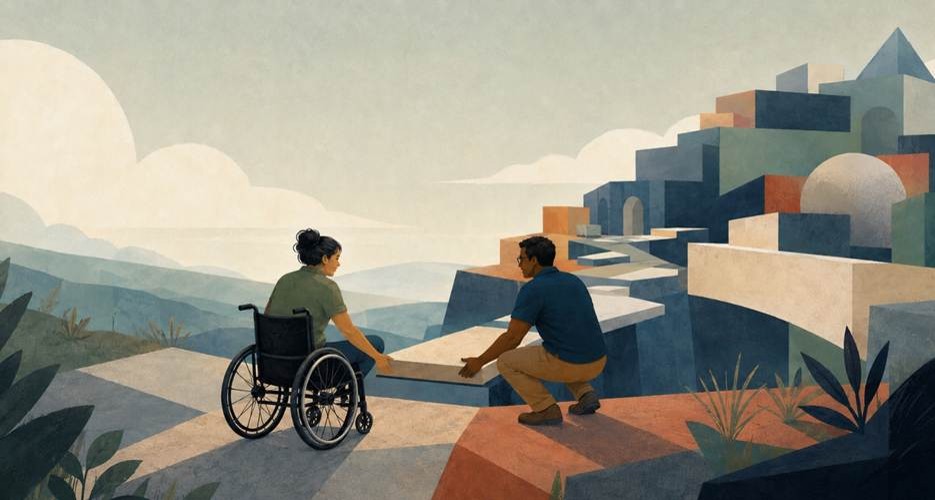
Resilience is not built in one defining moment. It develops through awareness, reflection, repeated effort, and the support available around us. At times, it may involve learning a new way of coping. At other times, it may begin with recognising something that was there all along: quiet evidence that we have managed before, we do not have to manage alone, and can still find a next step within reach.
References
Ginsburg, K. R. (2020). Ingredients of resilience: 7 crucial Cs. In Building Resilience in Children and Teens (4th ed.). American Academy of Pediatrics.
Masten, A. S. (2001). Ordinary magic: Resilience processes in development. American Psychologist, 56(3), 227–238.
Southwick, S. M., Bonanno, G. A., Masten, A. S., Panter-Brick, C., and Yehuda, R. (2014). Resilience definitions, theory, and challenges: Interdisciplinary perspectives. European Journal of Psychotraumatology, 5(1), 25338.
Ungar, M. (2011). The social ecology of resilience: Addressing contextual and cultural ambiguity of a nascent construct. American Journal of Orthopsychiatry, 81(1), 1–17.
World Health Organization. (2020). Doing What Matters in Times of Stress: An Illustrated Guide. WHO publication.