
Stroke cases in Singapore have risen from 6,143 in 2011 to 9,680 in 20212, making stroke one of the leading causes of disability today. This increase highlights the importance of early rehabilitation and evidence-based approaches that support stroke survivors to regain their abilities and independence.
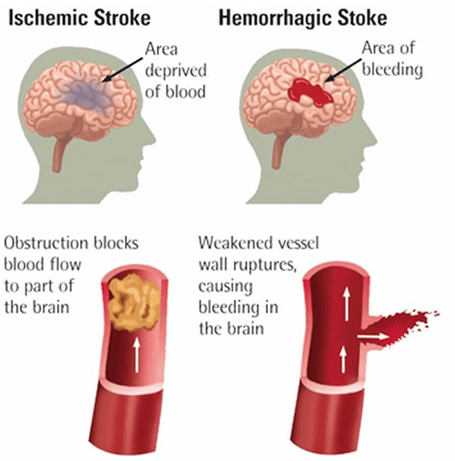
A stroke occurs when blood flow to the brain is interrupted, depriving brain cells of oxygen, leading to motor, sensory, balance, and cognitive impairments.2,4
Stroke takes a heavy toll in Singapore, costing an estimated 568 healthy life years per 100,000 people through death or long-term disability.9
In this article, SPD occupational therapist Lim Wan Xuan explains how rehabilitation helps stroke survivors relearn skills and rebuild independence in daily life.
The brain’s amazing ability to rewire itself
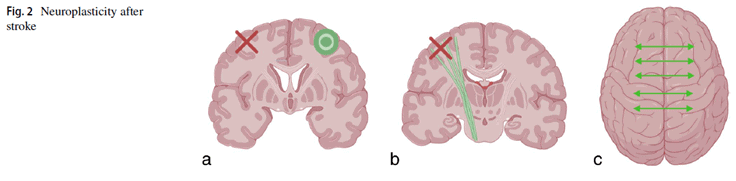
When a stroke affects brain function, the brain has a remarkable ability to reorganise itself.1,8 This ability is called neuroplasticity. In simpler terms, the brain can rewire and adapt itself, much like rerouting traffic around a blocked road. The brain can: 4
- Recruit new helpers: Engaging other brain areas, especially those from the non-damaged side, to take over lost functions.
- Repair and strengthen any surviving neural pathways in the affected area.
- Restore communication between the damaged and healthy sides of the brain.
Neuroplasticity is most active within the first three to six months after a stroke.1,4 This is when therapy has the biggest impact, with stroke survivors achieving up to 70 per cent of their maximum motor recovery potential within the first three months after a stroke.2
This is why starting rehabilitation early is important, as it can significantly improve recovery outcomes and increase the chances of returning home sooner. 2
How therapy supports recovery
Rehabilitation harnessing neuroplasticity should be timely, task-specific, repetitive, and high in intensity. 2,5
Techniques such as task-specific training, constraint-induced movement therapy (CIMT), mental practice, and robotic-assisted therapy can boost recovery by strengthening muscles, improving coordination, and encouraging use of the affected side of the body.1
Task-specific training
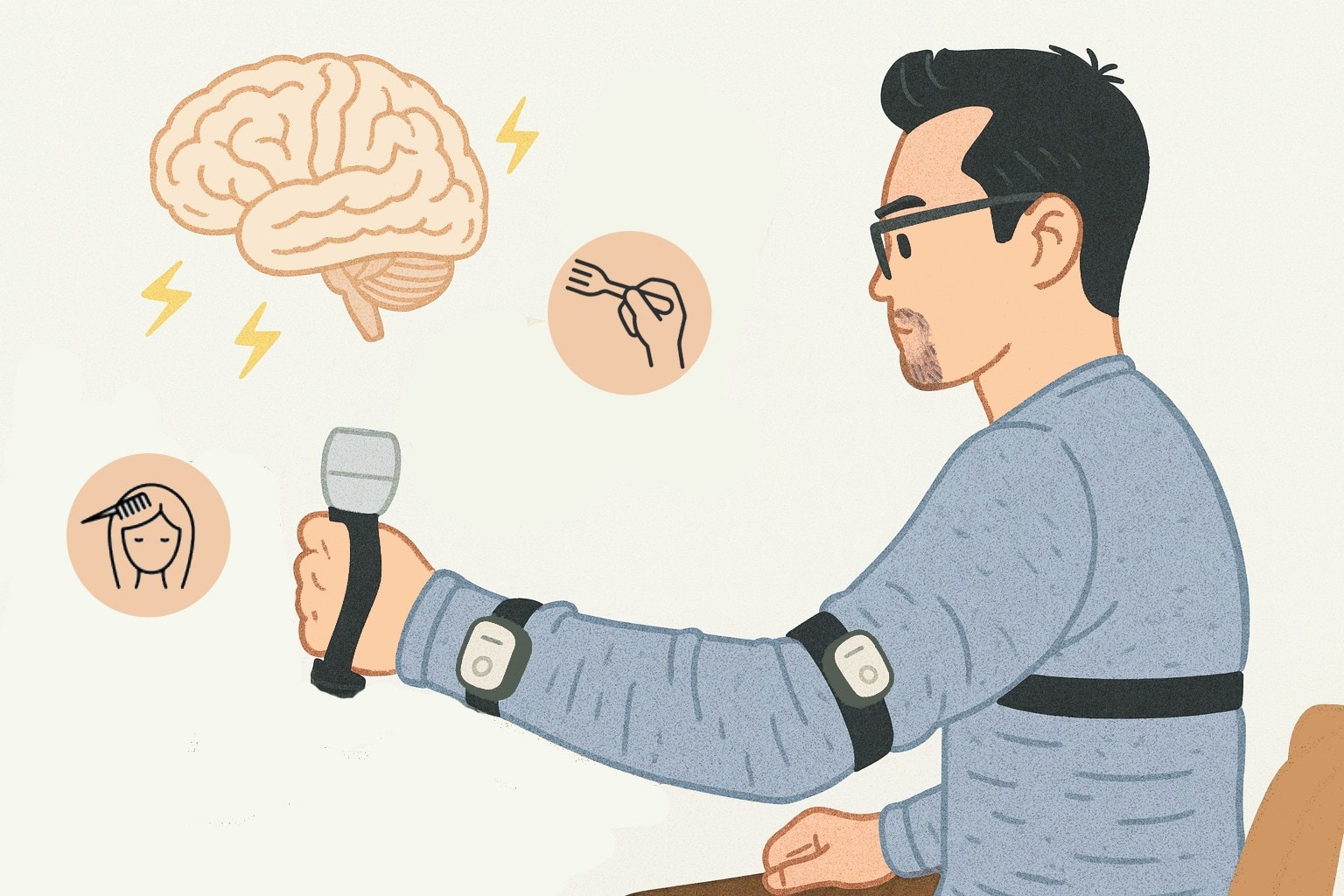
This approach focuses on repetitive practice of everyday activities that stroke survivors want to regain.3,5 These include drinking from a cup, combing hair or cutting food. Research shows that frequent practices can induce neuroplasticity, leading to functional improvement.2
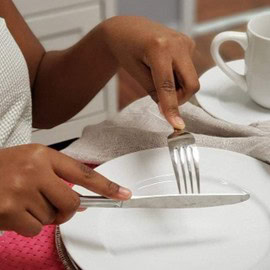
For instance, someone relearning how to use a fork can do exercises to strengthen the grip and control of their fingers. This helps to stabilise the fork in their palm during mealtime.
Exercise: Use fingers to squeeze a tweezer with a coin between its tips while rotating the palm up and down, keeping elbow close to the body. Once this becomes easier, extend the index finger during the movement to simulate actual fork use. See below for the video example.
Constraint-Induced Movement Therapy (CIMT)
In this therapy, the unaffected arm is gently restrained to encourage the use of the weaker arm. Over time, this helps the brain form new neural connections and prevents “learned non-use”, enabling the affected arm to regain more control.1, 2, 5
Mental practice
Imagining movements without physically doing them is a technique that helps stroke survivors mentally rehearse everyday tasks, like picking up a cup, even if they cannot physically perform them.5 Studies found that this can have short-term benefits for upper limb movement, especially for those with more severe weakness.5 When used alongside other therapeutic interventions, it may help further improve arm function.5
Robotic-Assisted Therapy
This therapy uses equipment to create interactive, game-like environments where patients can practise everyday movements, such as grasping a virtual ball.4
Technological systems can provide real-time feedback and simulate real-life situations, making therapy more engaging and effective. The equipment supports physical movement and stimulates brain activity to encourage neuroplasticity and recovery of motor and cognitive abilities.4 Some examples include:
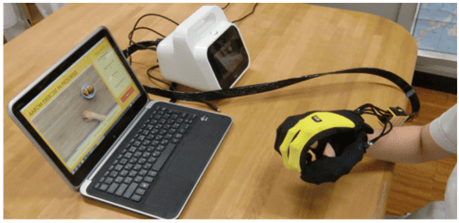
(a) EsoGlove: A lightweight robotic glove that helps patients with severe hand paralysis practise fine motor movement using visual feedback and assisted motion; 6
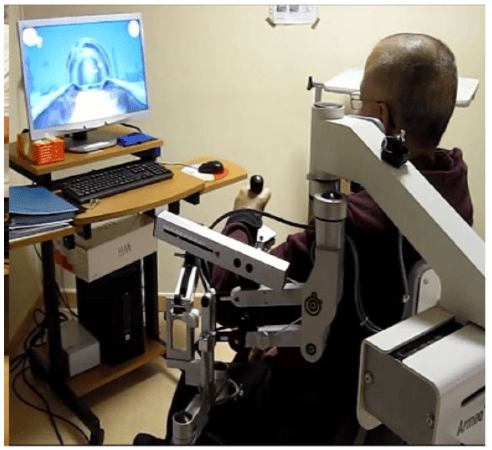
(b) ArmeoSpring: An upper limb exoskeleton providing arm support to increase the remaining active range of motion;7
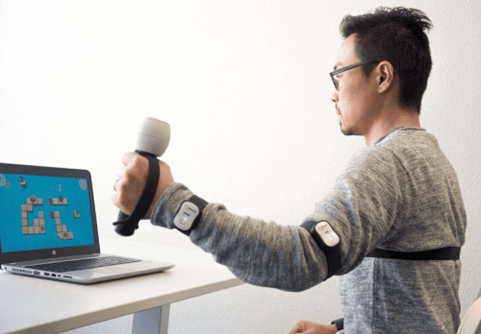
(c) ArmeoSenso: An equipment that allows survivors to improve their strength and endurance.7
Conclusion
Neuroplasticity plays a powerful role in post-stroke rehabilitation. Timely and targeted therapy can give stroke survivors a stronger start to their recovery journey.
——————————————–
As we mark World Stroke Day on 29 October, we are reminded that recovery is never a journey taken alone.
SPD is privileged to be part of Singapore’s Stroke Rehab Ecosystem, working alongside hospitals, community partners and caregivers to ensure that every stroke survivor has access to coordinated, long-term support.
Launched in August 2025, this initiative is led by the Lien Foundation, Singapore General Hospital, and Tan Tock Seng Hospital, together with AWWA, NTUC Health, Stroke Support Station (S3), St Luke’s ElderCare, and SPD. By strengthening this network of care, we aim to give survivors every opportunity to regain confidence and rebuild skills.
References
- Aderinto, N., AbdulBasit, M. O., Olatunji, G., & Adejumo, T. (2023). Exploring the transformative influence of neuroplasticity on stroke rehabilitation: a narrative review of current evidence. Annals of Medicine & Surgery, 85, 4425–4432. http://dx.doi.org/10.1097/MS9.0000000000001137
- Lui, S. K. (2024). Stroke rehabilitation. The Singapore Family Physician, 50(3), 40-47. https://doi.org/10.33591/sfp.50.3.u6
- Manzoor, S., Subazwari, B., Bibi, Z., Kazmi, S. Z. H., Imtiaz, H., & Dboba, M. M. (2023). Comparison of task specific training vs neuro developmental training approach along with conventional therapy for upper limb motor function among chronic stroke patients. Journal of Nursing & Healthcare, 8(2), 121-128. https://doi.org/10.33140/JNH
- Marin‑Medina, D. S., Arenas‑Vargas, P. A., Arias‑Botero, J. C., Gomez‑Vasquez, M., Jaramillo‑Lopez, M. F., & Gaspar‑Toro, J. M. (2024). New approaches to recovery after stroke. Neurological Sciences, 45, 55-63. https://doi.org/10.1007/s10072-023-07012-3
- McCluskey, A., Lannin, N. A., Schurr, K., Dorsch, S., & Christie, L. J. (In Press, 2024). Skills and strategies for improving arm function and occupational participation after acquired brain impairment. In Curtin, M., Egan, M., Parnell, T., Prior, Y., Cezar da Cruz, D., Sauvé-Schenk, K., & Galvaan, R. (Eds.). Occupational therapy for people experiencing illness, injury or impairment (8th ed.). Edinburgh: Elsevier.
- Ochi, M., Hori, R., Tokunaga, M., Moriyama, Y., Hachisuka, A., Ito, H., Matsushima, Y., & Saeki, S. (2024). Feasibility of using a novel hand-training support robot for patients with acute stroke and severe hand paralysis: A retrospective study. Research Square. https://doi.org/10.21203/rs.3.rs-4568034/v1
- Pedro-Amalio, S. & Rafael, S. (2022). Effectiveness of robotic therapy in the proximal and distal rehabilitation of the upper limb in patients after stroke using the Amadeo® and Armeo® devices: a systematic review of randomized clinical trials. Studies in Psychology, 43(1), 132-178, https://doi.org/10.1080/02109395.2021.2009677
- Su, F. & Xu, W. (2020). Enhancing brain plasticity to promote stroke recovery. Frontiers in Neurology, 11(554089), 1-15. https://doi.org/10.3389/fneur.2020.554089
- Venketasubramanian, N. (2025). Stroke Epidemiology in Asia. Cerebrovascular diseases extra, 15(1), 81–92. https://doi.org/10.1159/000543399