

SPD senior speech therapist Loo Qingwen has over a decade of experience working with diverse groups of people, from adults rediscovering their voices to little ones speaking their first words. Five years into her role at SPD, Qingwen continues to champion communication access for every child she supports, driven by her belief that every voice deserves to be heard, valued, and understood.
In conjunction with Speech Therapy Week (3 to 9 November), we shine the spotlight on Qingwen in this Power of Care Series.
UPDATES: Tell us more about your role as a senior speech therapist.
Qingwen: I’m currently working under the Development Support and Learning Support (DSLS) programme, where I support children in their pre-school. The first half of the day is spent seeing children on my caseload, unless there are meetings.
When the children nap, I switch gears and work on admin tasks like reports and parent updates. Depending on where my cases are for the day, I may see another one or two cases from about 3pm onwards. If there are no sessions, that time is typically used for meetings or supervisions. I usually end the day by clearing more admin work and preparing for the next day’s sessions.
I really enjoy watching the children blossom over the course of 10 weeks, the duration of each programme cycle. And the funny stories the children tell me really make my day!
UPDATES: What inspired you to become a speech therapist, and what continues to motivate you in this work?
Qingwen: I always wanted a job that helps people and considered careers in psychology and physiotherapy. But after volunteering and observing speech therapists in hospitals, I knew that speech therapy was the one for me. Something about helping people lead more fulfilling lives whether by communicating more effectively or swallowing safely just felt right to me.
Over the years, there have been many moments that anchor me to this profession. When I worked with adults, it was the joy of helping someone progress enough to be weaned off a feeding tube. These days, it’s when a caregiver or teacher shares about how other people can understand the child better now, or how the child is more confident in speaking up in class. These memorable moments reaffirmed my decision all those years ago to be a speech therapist.
UPDATES: What are some challenges you face in your work?
Qingwen: Being a community therapist means that the clients we serve don’t always have access to resources. Some caregivers are juggling work and multiple responsibilities so they may not have the time or capacity to work on every goal we set for their child. So, it’s about being creative and optimising the resources we have.
For instance, getting caregivers to focus on only one goal and providing resources such as pictures, questions and answers sheets, or scaffolds that the child can use at home. When families feel that the goal is doable, their buy-in may be stronger.
While it may be challenging at times, it also means that I’m better positioned to help people who may not otherwise be able to access such services. This is also one of the reasons why I left the private setting.
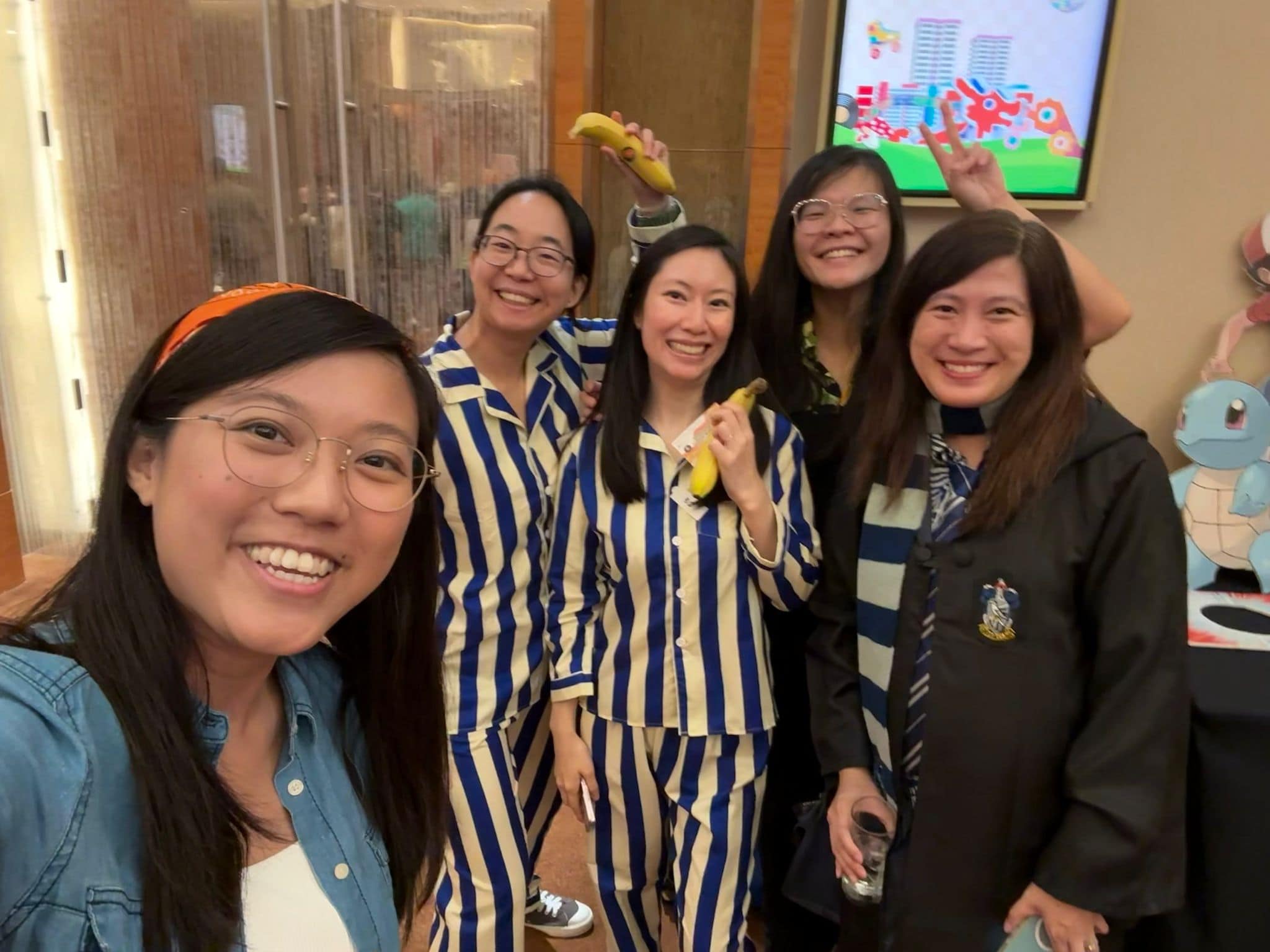
It also helps that I have a great team that motivates me every day!
UPDATES: Can you share a time when strong collaboration with colleagues, caregivers, or partners made a big difference in your work?
Qingwen: I recently saw a child who had mild speech sound errors. Because he was so aware of his errors, it impacted his confidence and participation during Show and Tell activities. To mask his anxiety, he would act silly and needed lots of prompting from the teacher to complete the task.
Besides working on his speech sound errors, we set a goal targeting his Show and Tell skills, by starting with a small group of peers then working up to a larger group. By the end of therapy, with support from his teacher and mother, he stood in front of about 10 peers and completed his Show and Tell in an audible voice, though he still covered his face with his notes. The best part was seeing him using these skills in class and completing the same activity with his whole class present! It helped that he was very motivated throughout the sessions and would request to have more peers present each time.
It’s true what they say – “It takes a village to raise a child”. When caregivers follow through with recommendations, teachers are willing to try the strategies we share, and the child is motivated to give things a go, the progress can be amazing.
UPDATES: How would you define care?
Qingwen: For me, it’s about being attentive. In my day-to-day work, that looks like listening carefully to how the teachers perceive the child is coping in the classroom, or the caregivers’ concerns for their child because assessments only form one part of the picture. Then it’s about listening to the child and using all these information to set functional goals and adapt the therapy to suit the child’s pace. Most importantly, it’s celebrating progress, no matter how small.
UPDATES: What’s something interesting or unexpected about being a speech therapist that people might not know?
Qingwen: Personally, I never expected this job to be so grounding. We often take the little things for granted, like being able to eat and talk freely. “Talk” being an all-encompassing term for the ability to understand what’s being said to you, string a coherent response, and then expressing it clearly.
Working with people across the lifespan constantly remind me of how precious these abilities are. It humbles me every day, and it motivates me to keep doing what I do. If I can help someone regain or gain even a fraction of that independence, and make life a bit more enjoyable and fulfilling for them and their loved ones, then I feel I’ve done something meaningful.
As we mark Speech Therapy Week, we extend our appreciation to all speech therapists who dedicate their hearts and skills to helping others communicate, connect, and thrive. Thank you for creating meaningful impact, one conversation at a time. Happy Speech Therapy Week!