
Acquiring a disability can alter life in ways that are sudden, profound and deeply personal. Beyond the physical changes, it often brings an emotional and mental journey of grief, adjustment and rediscovery as individuals – a journey towards a new identity and a new normal.
For Mr Mikail Wong and Mdm Siti Nooraini Bte Abdul Manaf, that journey began suddenly on a Thursday night in 2020. What followed was not only a physical recovery, but an emotional journey of adjustment, resilience and finding a new normal after an acquired disability, when an ordinary work shift changed their lives forever.
Mr Wong, then working as a taxi driver, had stopped to rest at a petrol kiosk when a sharp pain shot through his spine and the right side of his body went limp. Fearing it was a stroke, he called his wife, who sensed something was wrong. Doctors later found that he had suffered a spinal arteriovenous malformation and haemorrhage in the C6 to T5 section of his spinal cord, a rare condition that can go undiagnosed until a severe event occurs.
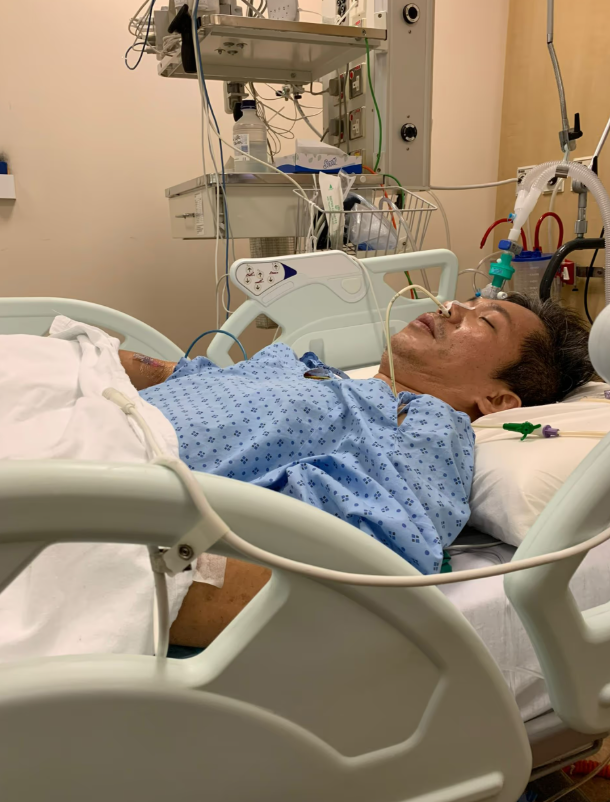
For Mdm Nooraini, the night was overwhelming. “I remember all I could see was chaos in the ward. Doctors and nurses were rushing to move my husband into the Intensive Care Unit and I was told that he might never walk again,” she recalled. “I was overwhelmed by grief, fear, uncertainty and deep sadness. Everything hit me at once, and I was trying to process the possibility that our lives could change forever, while finding the strength to be there for him.”
Coming to terms with change
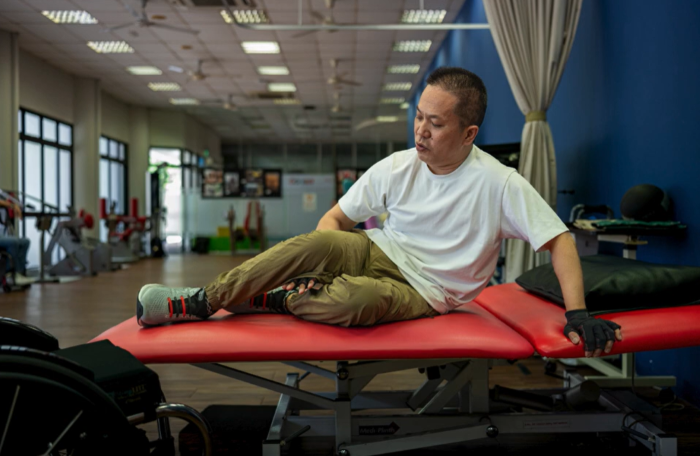
Physical recovery was only the first step. “The hardest part was coming to terms with how much my life has changed. There was a lot of uncertainty, frustration, and at times, a sense of loss,” Mr Wong said.
Used to being independent and ambitious, he had to redefine progress, self-worth and what it meant to ask for help.
Building a new identity together
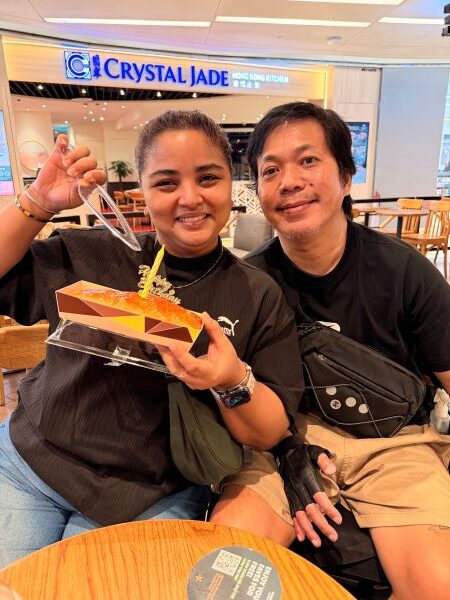
Mdm Nooraini also had to adjust as a caregiver. “From the start, I was determined not to pressure him into being ‘okay’ before he was ready,” she said. As Mr Wong grew stronger, she learnt to balance patience with encouragement, giving him space to rebuild confidence while staying close enough to support him.
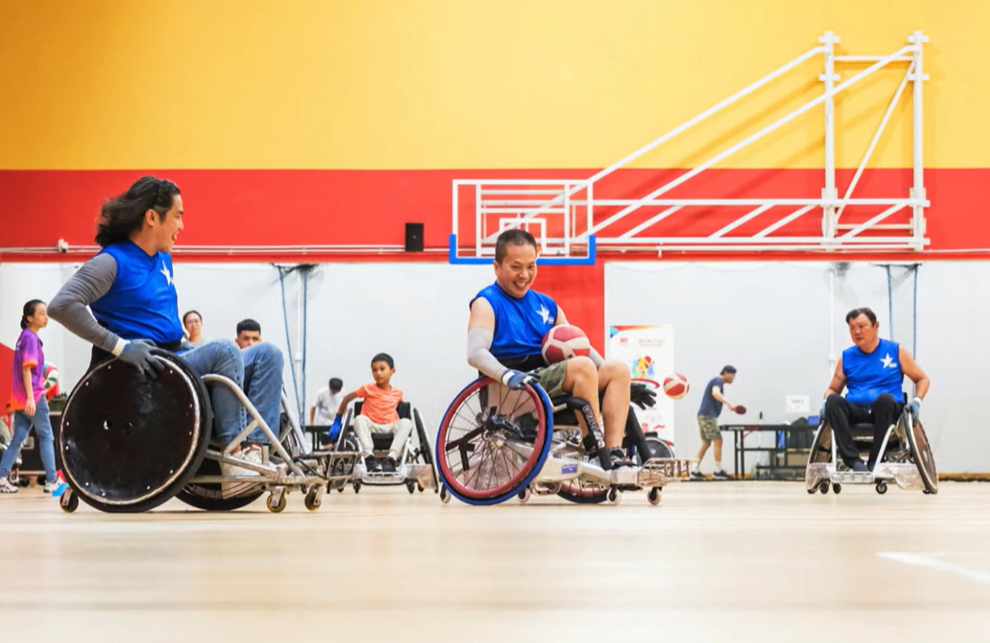
Wheelchair rugby became an unexpected turning point. Surrounded by athletes with different abilities, Mr Wong began to see disability beyond loss.
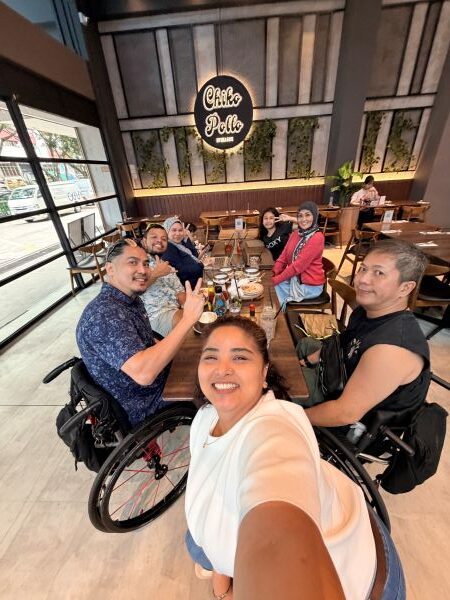
“I realised that being independent doesn’t necessarily mean doing everything on my own. Sometimes having the right support allows you to do more,”, he said. Through sport and community, he began to see disability not only through the lens of loss, but also possibility, confidence and connection.
Resilience, one step at a time
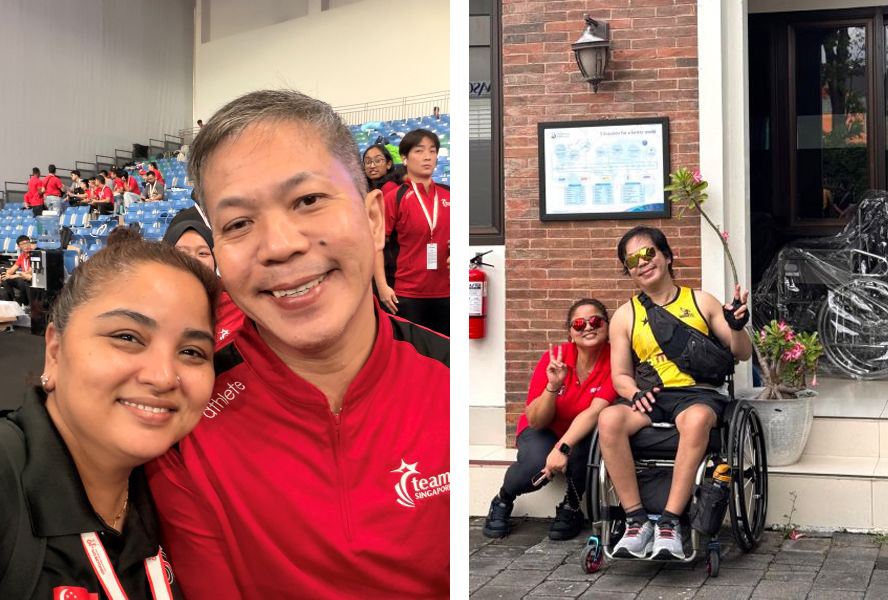
For the couple, resilience is not about pretending recovery is easy, but learning how to face each day with patience, honesty and hope.
“Mikail and I have been through so many obstacles, and I wouldn’t want to walk this journey with anyone else,” Mdm Nooraini said.
Their understanding of each other often goes beyond words. A simple gesture from Mr Wong during competitions is enough for Mdm Nooraini to know what he needs.
“After more than two decades together, I hope Nooraini knows that I see everything that she does, not just the big things, but especially the small things that go unnoticed,” Mr Wong said.
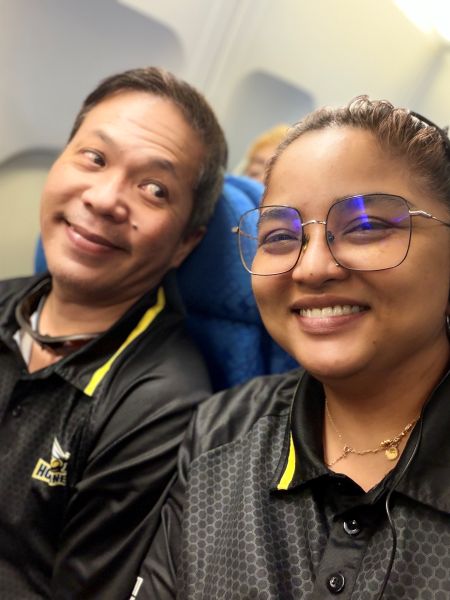
Mr Wong’s resilience was not built overnight, but through the slow, deliberate work of rebuilding his sense of self. For Mdm Nooraini, hers was shaped by learning when to hold on and when to let go. Together, they show that healing is rarely a straight path, but one that can be walked one small victory at a time.