
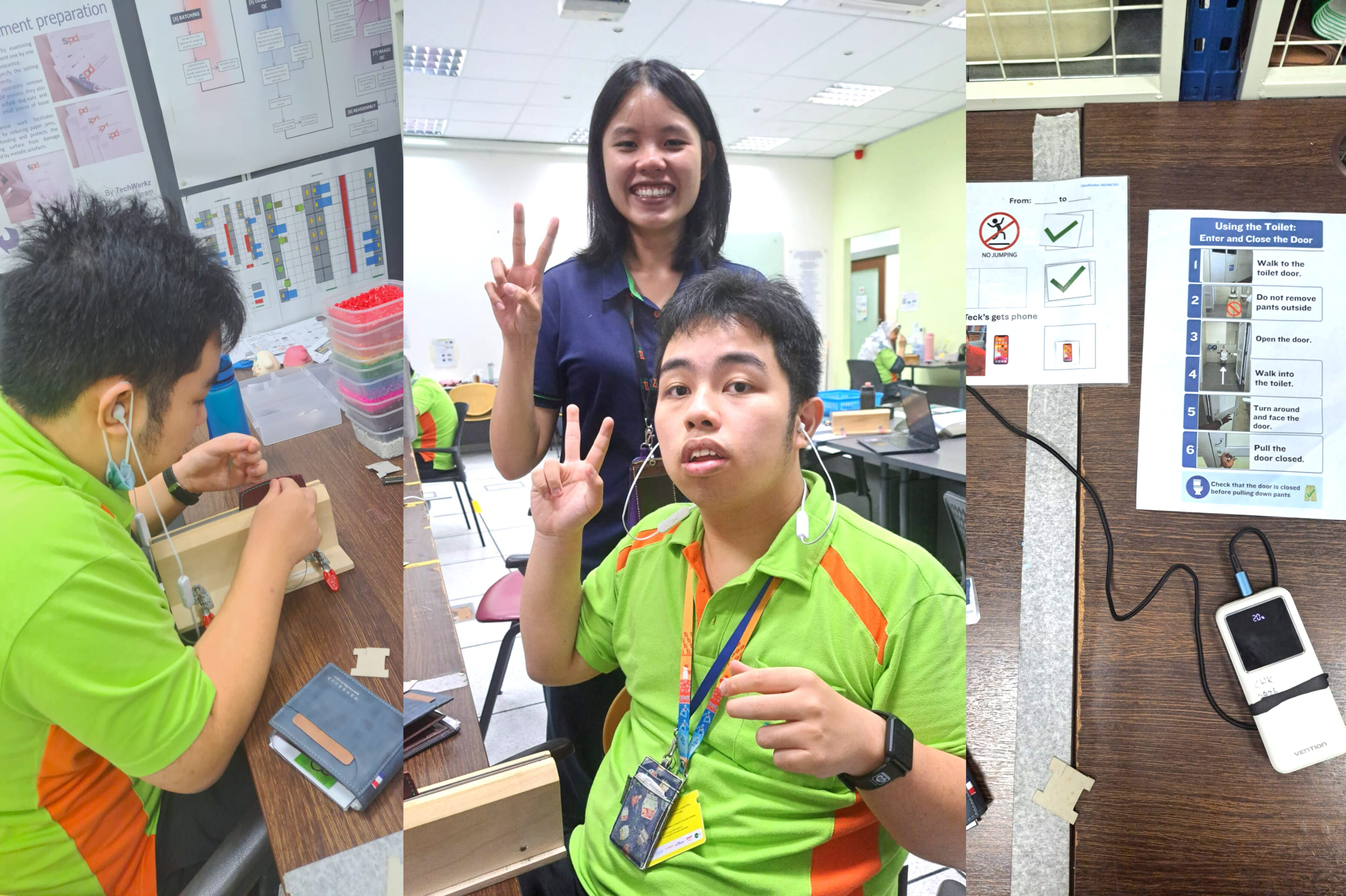
Leaving special education marks a new chapter for young adults and their families, with changes in routines, learning opportunities and support.
Day activity centres, sheltered workshops and the Enabling Skills for Life Programme (ESLP) offer different forms of support for adults with disabilities. Each has a role in meeting individual needs, interests and goals.
Navigating life after school
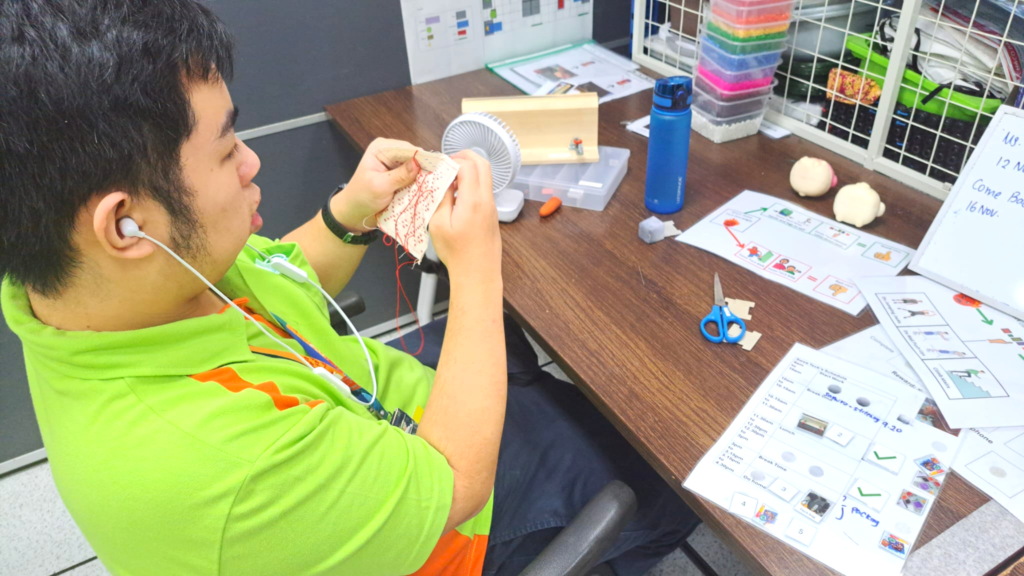
For 20-year-old Tan Swee Teck, this chapter began when he graduated from a special education school in November 2024. He joined SPD’s Sheltered Workshop in May 2025.
Adjusting to a new routine took time. Swee Teck found it difficult to sit still and express his frustrations, while his parents were worried when they could not reach him while he was out.
“Swee Teck prefers to know the exact schedule for the day. Any changes to his routine would upset him,” said his father, Mr Tan Yew Kong.
Over five months, the sheltered workshop team helped him settle into a structured daily schedule and identified areas for continued skills development.
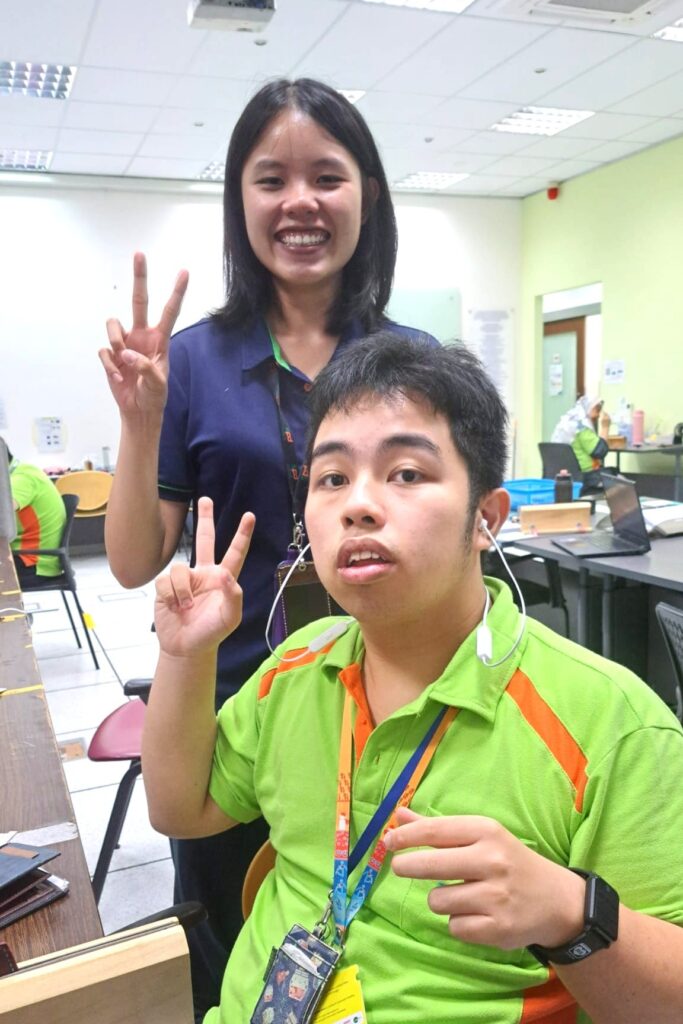
In October 2025, Swee Teck joined the ESLP for tailored skills development and socio-motor skills training. For him, this meant working on practical goals such as contacting his parents and buying meals independently. The programme also explores options suited to each person’s needs, including supported employment and community-based support such as the Enabling Services Hub.
“With ESLP, more resources are available to provide focused support for beneficiaries like Swee Teck to achieve the goals in their development plans. His family also receives more targeted, customised support, so they can continue his training consistently outside of the programme,” said Goh Kee Choon, senior manager overseeing ESLP.
Working together on everyday goals
ESLP training officers work with an occupational therapist, a physiotherapist and Swee Teck’s mother, Mrs Tan, to provide consistent support at the centre and at home. Building on his ability to focus on activities he enjoys, they also help him develop skills to express himself.
Together, Mrs Tan and his training officer, Cindy Tan, set achievable goals for Swee Teck. Cindy first assessed what he could already do. As he could recognise WhatsApp and find his parents’ contacts, she focused on teaching him when and how to call.
“We set up a call schedule where his parents would call him on some days and he would call them on others. It took almost three months of practice,” said Cindy.
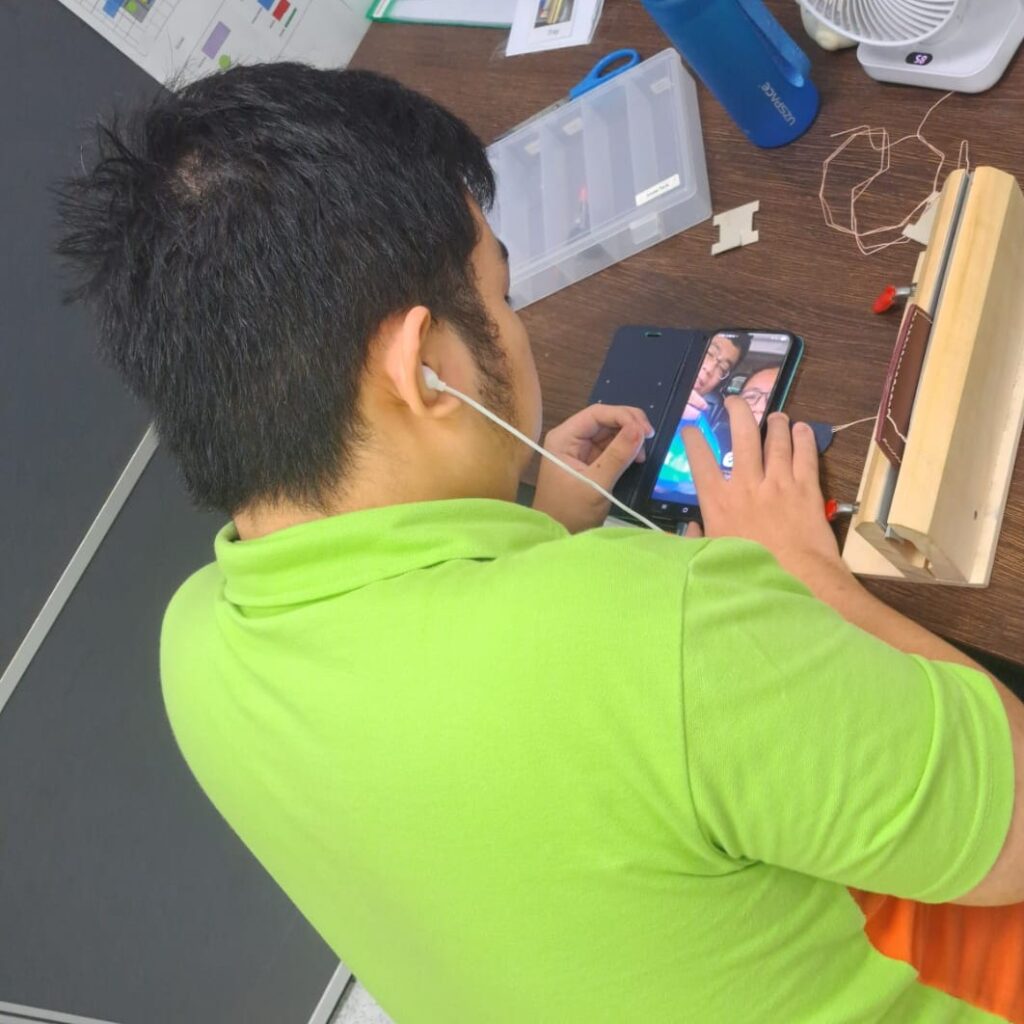
His parents reinforced the practice at home. Once he had mastered calling, Cindy moved on to his next goal: collecting his lunch independently, which he learnt in about two weeks
“He is now more independent and can buy his own meals with his own money,” Mrs Tan shared.
“Swee Teck can also walk to and from his workplace safely, paying attention to traffic on the road, something he struggled with previously. His reliance on caregivers has reduced significantly, giving me more time and space to rest and attend to other needs.”
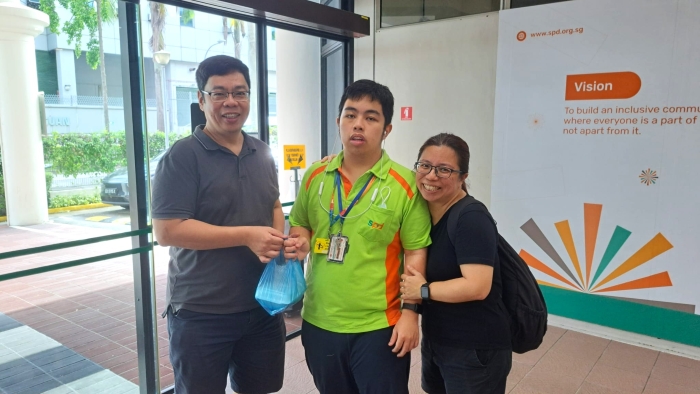
Swee Teck’s progress shows what is possible when support is shaped around a person’s own needs and goals, and delivered consistently by family and professionals working together. He continues to build the skills and confidence that make a difference in his daily life.