
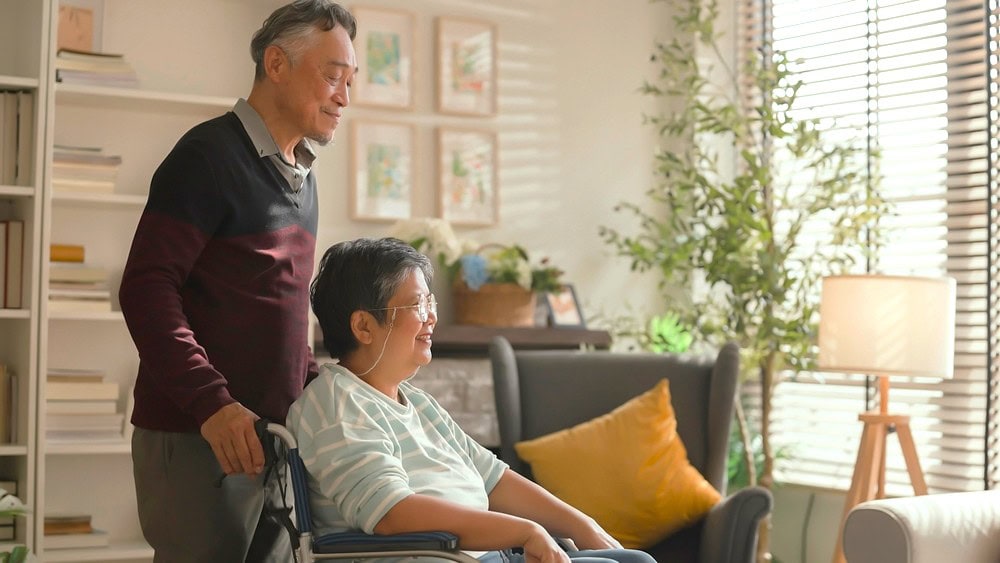
A well-designed home is essential for improving the quality of life for persons with dementia. They may experience challenges such as memory loss, confusion and have poor visual-spatial skills that will affect their daily activities. These result in their disorientation in familiar environments, increasing fall risks and reducing their ability to carry out daily activities.
SPD’s senior occupational therapist Selvaraj Babu sheds light on why creating a supportive home environment is crucial for individuals with dementia and their caregivers.
Common challenges faced by persons with dementia at home
Risk of wandering: Various challenges at home can significantly impact the daily lives of individuals with dementia and their overall well-being. One common issue is disorientation, where the individual becomes confused about time and place. This can lead to an increased risk of wandering.
Sensitivity to sounds and lights: Changes in the sensory system can increase a person’s sensitivity to certain sounds and lights, causing them to be overwhelmed in their environment. Additionally, individuals with visual-spatial difficulties may struggle to distinguish objects and the ability to navigate their surroundings safely. Memory loss further complicates everyday tasks such as locating items or preparing meals.
Fall risks, sense of identity: A decline in mobility increases the risk of falls at home, while a lack of participation in activities can adversely impact a person’s sense of identity and overall mental health. By thoughtfully addressing these challenges, we can enhance the safety, comfort and independence of individuals with dementia.
Designing a supportive home environment
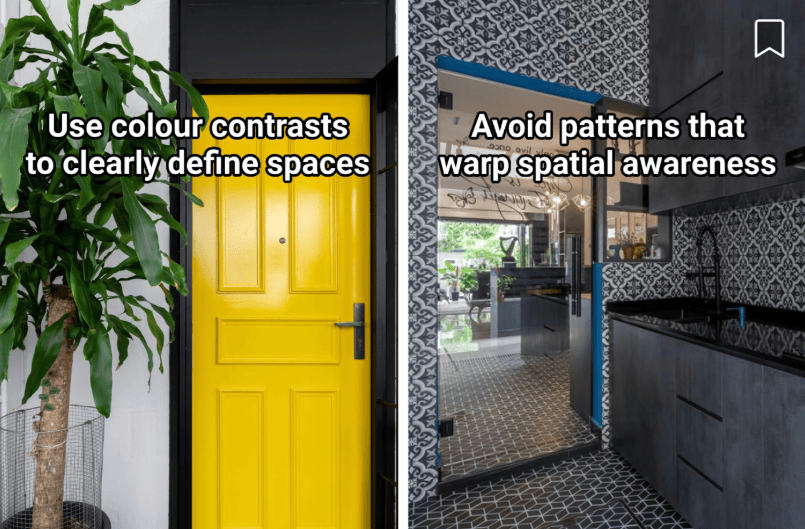
To create a dementia-friendly home, consider the following elements:
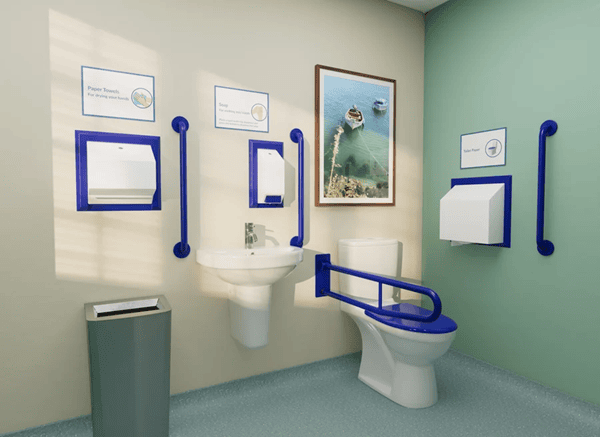
Colour use: High-contrast colours help differentiate spaces (e.g., a brightly coloured toilet seat against a white toilet bowl). Avoid complex patterns to reduce confusion.
Lighting: Maximise natural light and install sensor lights for safety at night. Dimmable lighting can enhance eye comfort throughout the day.
Furniture: Select accessible seating with armrests and maintain a clutter-free layout to promote familiarity. Ensure furniture contrasts with surrounding spaces for easy recognition.
Flooring: Opt for plain, non-slip flooring and avoid rugs that can pose tripping hazards. Use brightly coloured tape or paint to outline stairs and steps.
Bathroom safety: Keep essentials within reach, install grab bars and non-slip mats/anti- slip treatment to enhance safety.
Safe cooking and assistive technology: Consider stoves with automatic shut-off features to prevent unattended cooking risks. Additionally, explore options like fall sensors, CCTV systems and automated reminder devices for medication management.
Personal touches: Incorporate familiar items such as photographs to evoke positive memories and establish a consistent daily routine for security.
Orientation aids: Use clear labels for rooms and common items, along with visible clocks and calendars to support navigation.
Creating a dementia-friendly home can significantly enhances the quality of life for individuals with dementia while reducing caregiver stress. By fostering a secure environment that adapts to changing needs, we can help maintain the person’s dignity, independence, and a sense of belonging. The key to a dementia-friendly home is adaptability, as needs may change over time.
Cover image credit: Shutterstock
References:
- Agency for Integrated Care. (2019). Guidebook on activities for persons with dementia.
- Dementia Singapore. (n.d.). Making your home dementia-friendly. Dementia Hub SG.
- (2022). How to design a dementia-friendly home, as told by an expert.
- Dementia Singapore. (n.d.). 360 degree virtual reality dementia-friendly HDB home design guide. Dementia Hub SG.